Article
Finishing Two Rooms With ChatGPT
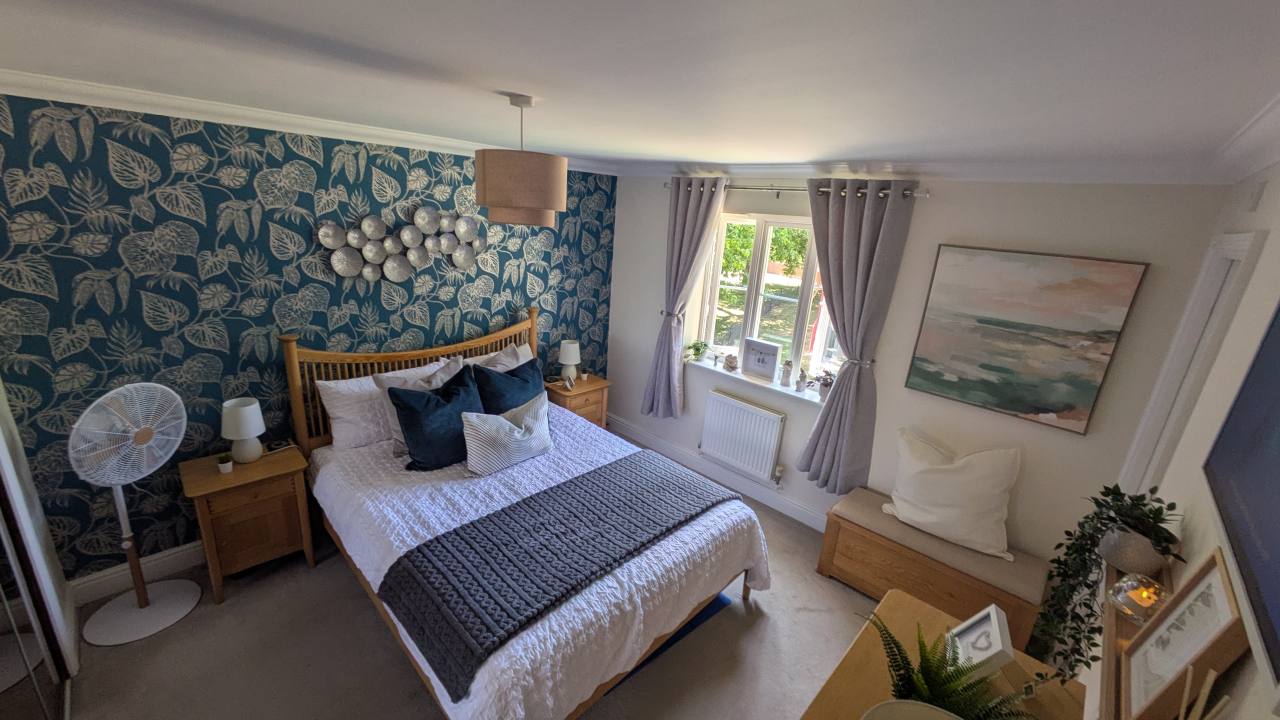
ChatGPT helped us finish our bathroom and bedroom without starting again.
Nothing was fundamentally wrong with either room. The bathroom had good finishes and solid practical pieces. The bedroom already had the oak furniture, teal wallpaper and the beginnings of a colour story. Both just felt a little sparse: more like rooms that had reached a sensible stopping point than rooms that had been properly finished.
So we used ChatGPT almost like a collaborative interior stylist.
Not to hand over our taste, and not to make every decision for us. It was there to help us look at the rooms more carefully, compare options without losing the thread, and test ideas before we spent money.
Start With The Room You Actually Have
We began with photographs of the bathroom and bedroom, then talked through what already worked, what felt unresolved and the mood we wanted to keep.
That mattered. It is easy to turn a room into a collection of individually nice purchases. A cushion can be lovely. So can a lamp, a plant pot or a print. But they do not automatically add up to a room that feels calm and intentional.
The photographs gave the conversation some useful constraints: the existing finishes, the amount of natural light, the furniture we wanted to retain and the practical things that still had to earn their space. ChatGPT can work with image inputs in a conversation, which made it possible to keep returning to the real rooms rather than talking around a vague mood board. OpenAI's image-input guidance describes the same useful pattern: start with a photo, then add more visual context as the conversation develops.
The Bathroom: Finish Rather Than Replace
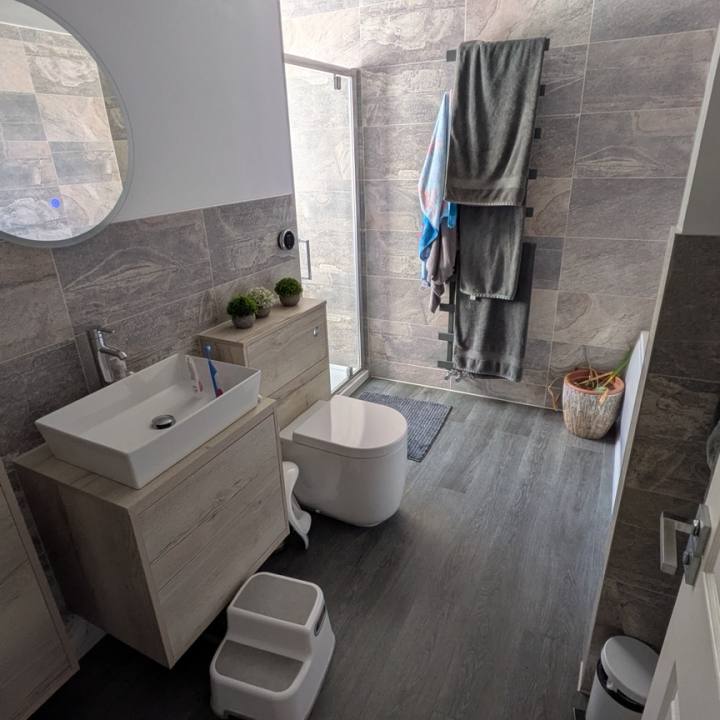
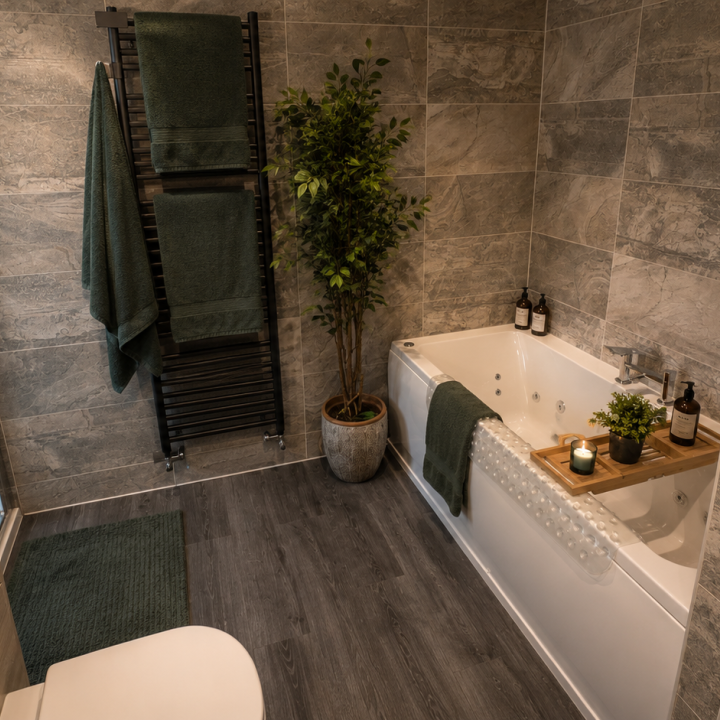
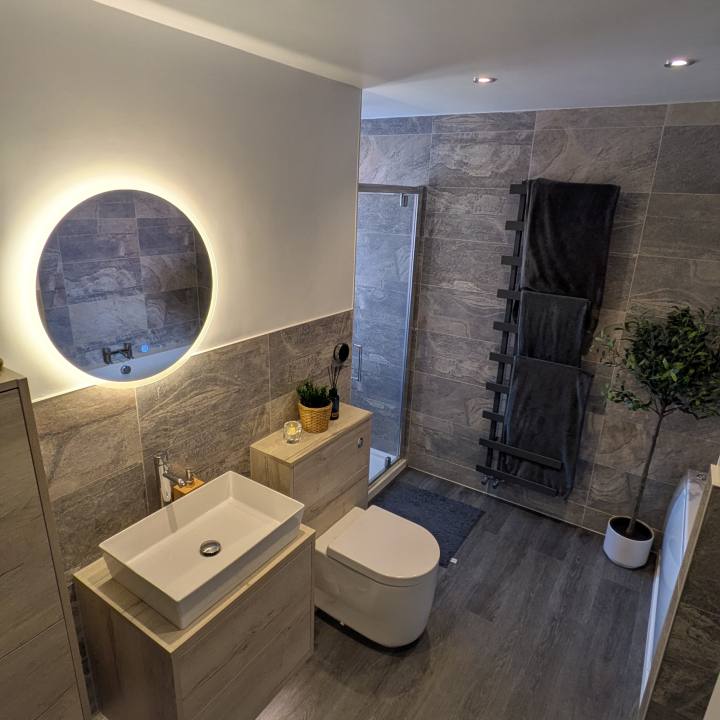
For the bathroom, the aim was not a refit. The grey stone-effect tiles, oak-toned furniture and white fittings were already doing their job.
The question was how to soften the room without competing with those finishes.
We worked through plants, artwork, candles and smaller decorative pieces, looking for things that would add warmth and texture while keeping the practical surfaces useful. It was a process of editing rather than accumulating. A few considered additions made the room feel more settled than a larger shopping list would have done.
The Bedroom: Make Every Choice Part Of One Scheme
The bedroom needed more coordination. We worked through bedding, cushions, curtains, lamps, artwork, shelving, plants, pots and even the fan.
The final scheme grew from a small, repeatable palette: teal, soft grey, white, champagne and natural oak. That gave us a way to judge each choice. Was a cushion too bright? Did black piping make the room feel harsher than it needed to? Would a white or grey fan sit more quietly in the space? Should the oak shelf sit above or below the television?
None of those are huge decisions in isolation. Together, they decide whether a bedroom feels coherent or merely busy.
Sharing product pages alongside photographs was especially useful. We could compare colour, scale, texture and price in the context of the room, then narrow a set of possibilities into one direction. It stopped us from repeatedly starting again.
Render To Test, Not To Pretend
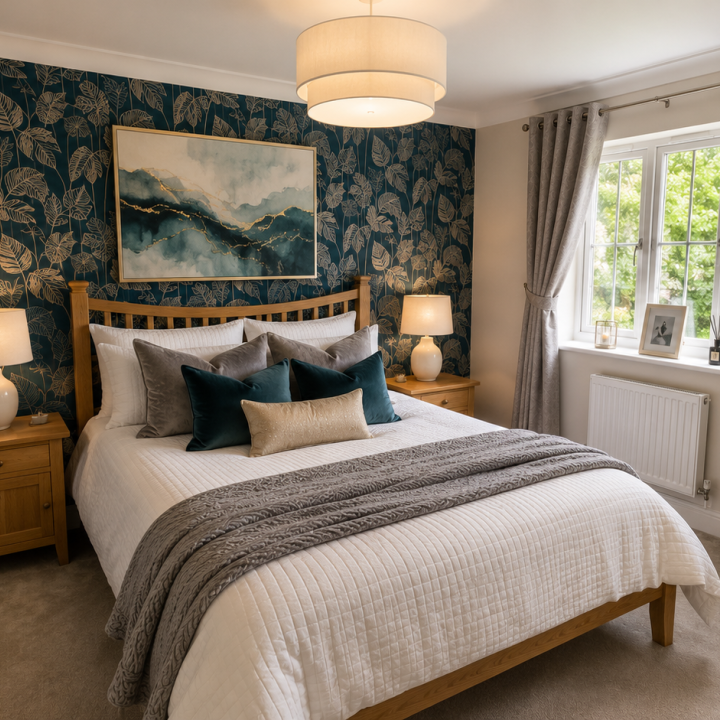
We also used visual renders to test ideas before committing. They helped us understand how a group of purchases might work together: grey curtains with the teal wall, white bedding with champagne accents, oak shelves and the more practical pieces that still needed to be there.
The renders were not a promise that everything would look exactly the same in changing daylight, nor a substitute for checking measurements and product details. They were a way of asking a much better question: does this idea feel right in this actual room?
That distinction is important. Image tools in ChatGPT can create or edit an image from a conversational brief, but the result still needs judgement. OpenAI's guidance on Images in ChatGPT notes that you can work from a description or an uploaded image; we found the useful part was the back-and-forth, not treating one render as a final answer.
Practical As Well As Creative
The process was useful beyond styling.
ChatGPT helped us build and revise shopping lists, spot duplicated or unnecessary items, find more affordable alternatives when something was sold out, and keep an eye on the overall budget. That made it easier to hold onto the original idea while still being realistic about availability and cost.
It also made it easier to say no. Some items looked good on their own but did not add enough to the whole room. Others were nearly right, but introduced a colour or finish we would then have had to solve somewhere else.
A Finished Room Is Usually A Series Of Small Decisions
What began as two decorated but slightly sparse rooms gradually became two finished spaces that feel layered, personal and cohesive.
The biggest difference was not one expensive purchase. It was the confidence of knowing that each item had been chosen as part of the same overall plan, with the room itself always in view.
That is where ChatGPT proved most helpful: not as a replacement for taste, but as a patient, practical sounding board. It gave us somewhere to put the questions, comparisons and half-formed ideas that can otherwise make a home project stall.
The result is that both rooms now feel complete, and they are spaces we are genuinely proud of.
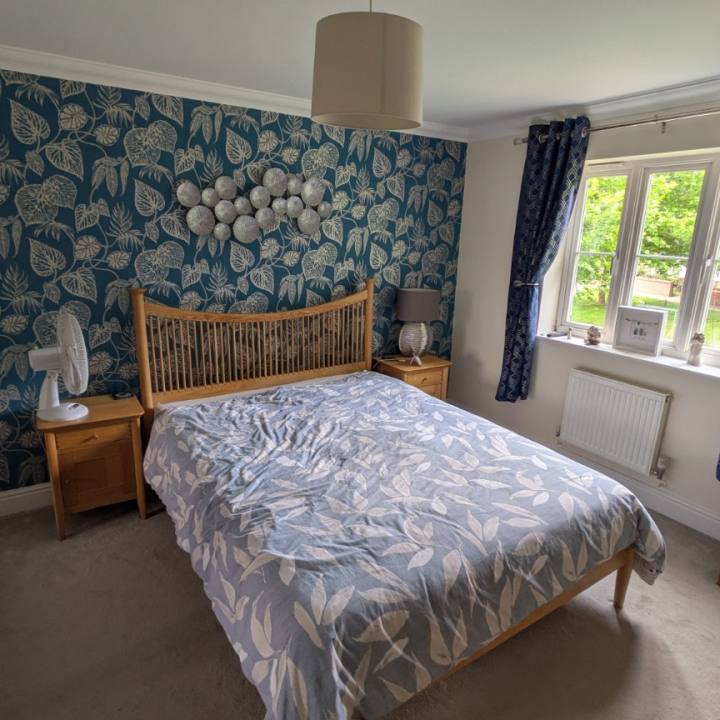
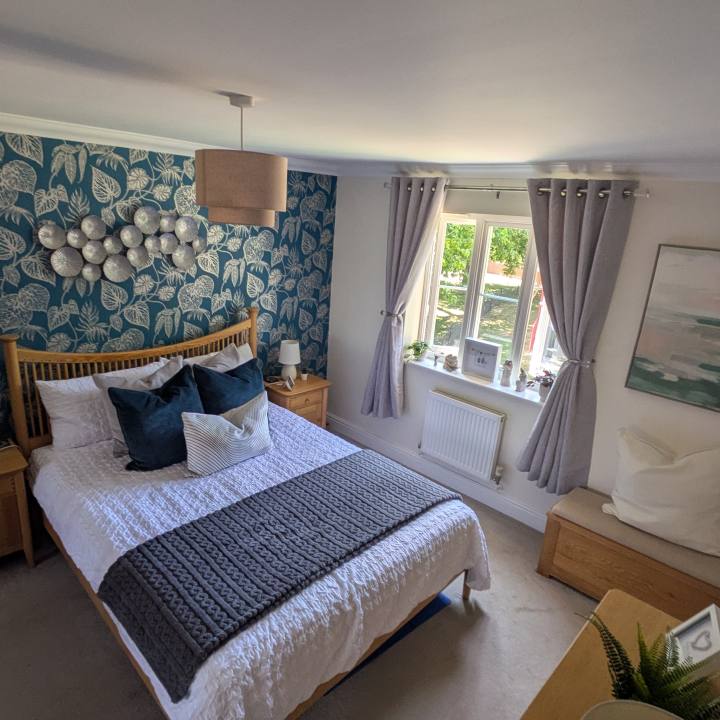
The Rooms, Before And After
Each row moves from before, through a ChatGPT render, to the finished room. The renders are working visuals, not photographs of the final rooms.
Sources
Need a steady technical partner for a web project?
Bring in senior help for planning, delivery, review or long-term support without adding more moving parts.